LPIC-2 Exam 201, Part 1 of 2, version 4.5 VCE 2026 Guaranteed Clear Exam Success
RealVCE offers you valid VCE files for 201-450 which you will need to clear the Lpi LPIC-2 Exam 201, Part 1 of 2, version 4.5 exam, the VCE files we sell, has got supreme quality and helps you to clear real exam surely with only one time attempt. We provide you a 100% pass guaranteed success and build your confidence to be 201-450: LPIC-2 Exam 201, Part 1 of 2, version 4.5 certified professional and have the credentials you need to be the outstanding performance with our 201-450 real questions. Our products are surely guaranteed to assist all candidates pass exams. We also guarantee your money safety. If you fail real exam with our LPIC-2 Exam 201, Part 1 of 2, version 4.5 dumps VCE and send us your unqualified score, we will full refund to you with two working days with any doubt. We are confident with our high-quality 201-450 real questions.
Get Complete and Professional premium VCE file
At present you get the new version of LPIC-2 Exam 201, Part 1 of 2, version 4.5 VCE 2026 available in the printable format because we know the worth of print-outs and how easy it is to learn when you log in our website on computer and download hard-copy of 201-450 real questions available. Trust us, your preparation for the real exam will get a whole lot convenience so that you have that added advantage, you can learn LPIC-2 Exam 201, Part 1 of 2, version 4.5 exam VCE on your laptop whenever you want for free.
Exam Details
The LPI 201-450 exam can change your career for the better and that is why it is important that you learn everything about this test. The certification exam is 90 minutes long, and with this allocated time, the individuals will have to answer 60 questions. This means that time management will play an important role during the test. The questions are based on the multiple-choice and fill-in-the-blank formats and you can take the exam in many languages, including Japanese, German, English, and Brazilian Portuguese. To succeed in LPI 201-450, the test takers need to score a minimum of 500 points out of possible 800.
If you want to take the LPI 201-450 exam, you need to first register on the official website and get your unique ID. You will use that ID to create your Pearson VUE account and schedule your test. Each applicant will have to pay a registration fee of $200. The exam also has a pretty solid retake policy. If you fail it the first time around, you will have the option to go for it again after waiting for at least 7 days. If you still fail the test, you will have to wait a month before you can have another go. The certification remains valid for 5 years.
Skills Tested in the Exam
According to LPI, this exam reviews your ability to perform advanced system administration alongside management of block storage and file systems, as well as you should carry out advanced networking and authentication and system security; install and configure fundamental network services in conjunction with management advice on automation and purchases. By and large, there are 7 major topics, ranging from topics such as Capacity Building, Linux Kernel, System Startup, File system and Devices, Advanced Storage Device Administration, Network Configuration and System Maintenance. It is important to bear in mind that each of them contains different objectives and their individual weights, key knowledge areas, terms, and utilities.
Within the syllabus, all of the numerous topics and objectives with individual details ensure certified candidates are well-rounded and skilled in all the areas they should have a thorough understanding. As mentioned above, each objective has a weight ranged from 1-4 to signify relative importance. Thereby, objectives with higher weights typically are included in questions more frequently.
Many IT elites are busy in working daytime and preparing exams night. Although they may feel laborious, they don't believe Lpi 201-450 real questions. All the wit in the world is not in one head. Maybe you have outstanding performance in work, professionals be professionals. LPIC-2 Exam 201, Part 1 of 2, version 4.5 VCE 2026 is the latest, valid and accurate study material for candidates who are eager to clear exams. You can actually grasp the limited time to do as much interesting and effective things you like as possible. 201-450: LPIC-2 Exam 201, Part 1 of 2, version 4.5 real questions are high value with competitive price products.

Career Path
After passing the LPI 201-450 exam, you should go for 202-450 to finalize the certification process. Once you ace both tests, you will be awarded the LPIC-2 certification, which can be followed by another LPI endorsement known as the LPIC-3 that has three specialized certificates for you to opt for.
Reference: https://www.lpi.org/our-certifications/exam-201-objectives
Ask us any-time if you are interested in our LPIC-2 Exam 201, Part 1 of 2, version 4.5 VCE 2026
RealVCE provide you excellent online support which is available for candidates 24/7 if you have problem about our 201-450 real questions, and we will answer your query in two hours mostly. Our service rule is that all emails and contacts will be replied as soon as possible. If you want to purchase our 201-450: LPIC-2 Exam 201, Part 1 of 2, version 4.5 VCE 2026, you will receive our products immediately after your payment.
All we are not only offering you the best 201-450 real questions and answers but also the foremost customer service. Please rest assured that your money and information will be strictly protected and safe with our 201-450: LPIC-2 Exam 201, Part 1 of 2, version 4.5 VCE 2026. Choosing our products will be your cleaver action for clearing Lpi LPIC 2 real exam.
Instant Download: Our system will send you the 201-450 braindumps file you purchase in mailbox in a minute after payment. (If not received within 12 hours, please contact us. Note: don't forget to check your spam.)
LPI 201-450 Exam Syllabus Topics:
| Topic | Details |
|---|
Capacity Planning |
| Measure and Troubleshoot Resource Usage | Weight: 6
Description: Candidates should be able to measure hardware resource and network bandwidth, identify and troubleshoot resource problems. Key Knowledge Areas:
-Measure CPU usage
-Measure memory usage
-Measure disk I/O
-Measure network I/O
-Measure firewalling and routing throughput
- Map client bandwidth usage
-Match / correlate system symptoms with likely problems
-Estimate throughput and identify bottlenecks in a system including networking The following is a partial list of the used files, terms and utilities:
-iostat
-netstat
-w
-top
-sar
-processes blocked on I/O
-blocks out
-vmstat
-pstree, ps
-Isof
-uptime
- swap
-blocks in |
| Predict Future Resource Needs | Weight: 2
Description: Candidates should be able to monitor resource usage to predict future resource needs. Key Knowledge Areas:
-Use monitoring and measurement tools to monitor IT infrastructure usage.
-Predict capacity break point of a configuration
-Observe growth rate of capacity usage
-Graph the trend of capacity usage
-Awareness of monitoring solutions such as Icinga2, Nagios, collectd, MRTG and Cacti The following is a partial list of the used files, terms and utilities:
-diagnose
-predict growth
-resource exhaustion |
Linux Kernel |
| Kernel Components | Weight: 2
Description: Candidates should be able to utilize kernel components that are necessary to specific hardware, hardware drivers, system resources and requirements. This objective includes implementing different types of kernel images, identifying stable and development kernels and patches, as well as using kernel modules. Key Knowledge Areas:
-Kernel 2.6.x, 3.x and 4.x documentation Terms and Utilities:
-/usr/src/linux/
-/usr/src/linux/Documentation/
-zImage
-bzImage
-xz compression |
| Compiling a kernel | Weight: 3
Description: Candidates should be able to properly configure a kernel to include or disable specific features of the Linux kernel as necessary. This objective includes compiling and recompiling the Linux kernel as needed, updating and noting changes in a new kernel, creating an initrd image and installing new kernels. Key Knowledge Areas:
-/usr/src/linux/
-Kernel Makefiles
-Kernel 2.6.x/3.x make targets
-Customize the current kernel configuration.
-Build a new kernel and appropriate kernel modules.
-Install a new kernel and any modules.
-Ensure that the boot manager can locate the new kernel and associated files.
-Module configuration files
-Use DKMS to compile kernel modules.
-Awareness of dracut Terms and Utilities:
-mkinitrd
-mkinitramfs
-make
-make targets (all, config, xconfig, menuconfig, gconfig, oldconfig, mrproper, zImage, bzImage, modules, modules_install, rpm-pkg, binrpm-pkg, deb-pkg)
-gzip
-bzip2
-module tools
-/usr/src/linux/.config
-/lib/modules/kernel-version/
-depmod
-dkms |
| Kernel runtime management and troubleshooting | Weight: 4
Description: Candidates should be able to manage and/or query a 2.6.x, 3.x or 4.x kernel and its loadable modules. Candidates should be able to identify and correct common boot and run time issues. Candidates should understand device detection and management using udev. This objective includes troubleshooting udev rules. Key Knowledge Areas:
-Use command-line utilities to get information about the currently running kernel and kernel modules
-Manually load and unload kernel modules
-Determine when modules can be unloaded
-Determine what parameters a module accepts
-Configure the system to load modules by names other than their file name.
-/proc filesystem
-Content of /, /boot/ , and /lib/modules/
-Tools and utilities to analyze information about the available hardware
-udev rules Terms and Utilities:
-/lib/modules/kernel-version/modules.dep
-module configuration files in /etc/
-/proc/sys/kernel/
-/sbin/depmod
-/sbin/rmmod
-/sbin/modinfo
-/bin/dmesg
-/sbin/lspci
-/usr/bin/lsdev
-/sbin/lsmod
-/sbin/modprobe
-/sbin/insmod
-/bin/uname
-/usr/bin/lsusb
-/etc/sysctl.conf, /etc/sysctl.d/
-/sbin/sysctl
-udevmonitor
-udevadm monitor
-/etc/udev/ |
System Startup |
| Customizing SysV-init system startup | Weight: 3
Description: Candidates should be able to query and modify the behaviour of system services at various targets / run levels. A thorough understanding of the systemd, SysV Init and the Linux boot process is required. This objective includes interacting with systemd targets and SysV init run levels. Key Knowledge Areas:
-Systemd
-SysV init
-Linux Standard Base Specification (LSB) Terms and Utilities:
-/usr/lib/systemd/
-/etc/systemd/
-/run/systemd/
-systemctl
-systemd-delta
-/etc/inittab
-/etc/init.d/
-/etc/rc.d/
-chkconfig
-update-rc.d
-init and telinit |
| System Recovery | Weight: 4
Description: Candidates should be able to properly manipulate a Linux system during both the boot process and during recovery mode. This objective includes using both the init utility and init-related kernel options. Candidates should be able to determine the cause of errors in loading and usage of bootloaders. GRUB version 2 and GRUB Legacy are the bootloaders of interest. Both BIOS and UEFI systems are covered. Key Knowledge Areas:
-BIOS and UEFI
-NVMe booting
-GRUB version 2 and Legacy
-grub shell
-boot loader start and hand off to kernel
-kernel loading
-hardware initialisation and setup
-daemon/service initialisation and setup
-Know the different boot loader install locations on a hard disk or removable device.
-Overwrite standard boot loader options and using boot loader shells.
-Use systemd rescue and emergency modes. Terms and Utilities:
-mount
-fsck
-inittab, telinit and init with SysV init
-The contents of /boot/, /boot/grub/ and /boot/efi/
-EFI System Partition (ESP)
-GRUB
-grub-install
-efibootmgr
-UEFI shell
-initrd, initramfs
-Master boot record
-systemctl |
| Alternate Bootloaders | Weight: 2
Description: Candidates should be aware of other bootloaders and their major features. Key Knowledge Areas:
-SYSLINUX, ISOLINUX, PXELINUX
-Understanding of PXE for both BIOS and UEFI
-Awareness of systemd-boot and U-Boot Terms and Utilities:
-syslinux
-extlinux
-isolinux.bin
-isolinux.cfg
-isohdpfx.bin
-efiboot.img
-pxelinux.0
-pxelinux.cfg/
-uefi/shim.efi
-uefi/grubx64.efi |
Filesystem and Devices |
| Operating the Linux filesystem | Weight: 4
Description: Candidates should be able to properly configure and navigate the standard Linux filesystem. This objective includes configuring and mounting various filesystem types. Key Knowledge Areas:
-The concept of the fstab configuration
-Tools and utilities for handling swap partitions and files
-Use of UUIDs for identifying and mounting file systems
-Understanding of systemd mount units Terms and Utilities:
-/etc/fstab
-/etc/mtab
-/proc/mounts
-mount and umount
-blkid
-sync
-swapon
-swapoff |
| Maintaining a Linux filesystem | Weight: 3
Description: Candidates should be able to properly maintain a Linux filesystem using system utilities. This objective includes manipulating standard filesystems and monitoring SMART devices. Key Knowledge Areas:
-Tools and utilities to manipulate and ext2, ext3 and ext4
-Tools and utilities to perform basic Btrfs operations, including subvolumes and snapshots
-Tools and utilities to manipulate XFS
-Awareness of ZFS Terms and Utilities:
-mkfs (mkfs.*)
-mkswap
-fsck (fsck.*)
-tune2fs, dumpe2fs and debugfs
-btrfs, btrfs-convert
-xfs_info, xfs_check, xfs_repair, xfsdump and xfsrestore
-smartd, smartctl |
| Creating and configuring filesystem options | Weight: 2
Description: Candidates should be able to configure automount filesystems using AutoFS. This objective includes configuring automount for network and device filesystems. Also included is creating filesystems for devices such as CD-ROMs and a basic feature knowledge of encrypted filesystems. Key Knowledge Areas:
-autofs configuration files
-Understanding of automount units
-UDF and ISO9660 tools and utilities
-Awareness of other CD-ROM filesystems (HFS)
-Awareness of CD-ROM filesystem extensions (Joliet, Rock Ridge, El Torito)
-Basic feature knowledge of data encryption (dm-crypt / LUKS) Terms and Utilities:
-/etc/auto.master
-/etc/auto.[dir]
-mkisofs
-cryptsetup |
Advanced Storage Device Administration |
| Configuring RAID | Weight: 3
Description: Candidates should be able to configure and implement software RAID. This objective includes using and configuring RAID 0, 1 and 5. Key Knowledge Areas:
-Software raid configuration files and utilities Terms and Utilities:
-mdadm.conf
-mdadm
-/proc/mdstat
-partition type 0xFD |
| Adjusting Storage Device Access | Weight: 2
Description: Candidates should be able to configure kernel options to support various drives. This objective includes software tools to view & modify hard disk settings including iSCSI devices. Key Knowledge Areas:
-Tools and utilities to configure DMA for IDE devices including ATAPI and SATA
-Tools and utilities to configure Solid State Drives including AHCI and NVMe
-Tools and utilities to manipulate or analyse system resources (e.g. interrupts)
-Awareness of sdparm command and its uses
-Tools and utilities for iSCSI
-Awareness of SAN, including relevant protocols (AoE, FCoE) Terms and Utilities:
-hdparm, sdparm
-nvme
-tune2fs
-fstrim
-sysctl
-/dev/hd*, /dev/sd*, /dev/nvme*
-iscsiadm, scsi_id, iscsid and iscsid.conf
-WWID, WWN, LUN numbers |
| Logical Volume Manager | Weight: 3
Description: Candidates should be able to create and remove logical volumes, volume groups, and physical volumes. This objective includes snapshots and resizing logical volumes. Key Knowledge Areas:
-Tools in the LVM suite
-Resizing, renaming, creating, and removing logical volumes, volume groups, and physical volumes
-Creating and maintaining snapshots
-Activating volume groups Terms and Utilities:
-/sbin/pv*
-/sbin/lv*
-/sbin/vg*
-mount
-/dev/mapper/
-lvm.conf |
Network Configuration |
| Basic networking configuration | Weight: 3
Description: Candidates should be able to configure a network device to be able to connect to a local, wired or wireless, and a wide-area network. This objective includes being able to communicate between various subnets within a single network including both IPv4 and IPv6 networks. Key Knowledge Areas:
-Utilities to configure and manipulate ethernet network interfaces
-Configuring basic access to wireless networks Terms and Utilities:
-ip
-ifconfig
-route
-arp
-iw
-iwconfig
-iwlist |
| Advanced Network Configuration and Troubleshooting | Weight: 4
Description: Candidates should be able to configure a network device to implement various network authentication schemes. This objective includes configuring a multi-homed network device and resolving communication problems. Key Knowledge Areas:
-Utilities to manipulate routing tables
-Utilities to configure and manipulate ethernet network interfaces
-Utilities to analyze the status of the network devices
-Utilities to monitor and analyze the TCP/IP traffic Terms and Utilities:
-ip
-ifconfig
-route
-arp
-ss
-netstat
-lsof
-ping, ping6
-nc
-tcpdump
-nmap |
| Troubleshooting Network Issues | Weight: 4
Description: Candidates should be able to identify and correct common network setup issues, to include knowledge of locations for basic configuration files and commands. Key Knowledge Areas:
-Location and content of access restriction files
-Utilities to configure and manipulate ethernet network interfaces
-Utilities to manage routing tables
-Utilities to list network states.
-Utilities to gain information about the network configuration
-Methods of information about the recognized and used hardware devices
-System initialization files and their contents (SysV init process)
-Awareness of NetworkManager and its impact on network configuration Terms and Utilities:
-ip
-ifconfig
-route
-ss
-netstat
-/etc/network/, /etc/sysconfig/network-scripts/
-ping, ping6
-traceroute, traceroute6
-mtr
-hostname
-System log files such as /var/log/syslog, /var/log/messages and the systemd journal
-dmesg
-/etc/resolv.conf
-/etc/hosts
-/etc/hostname, /etc/HOSTNAME
- /etc/hosts.allow, /etc/hosts.deny |
System Maintenance |
| Make and install programs from source | Weight: 2
Description: Candidates should be able to build and install an executable program from source. This objective includes being able to unpack a file of sources. Key Knowledge Areas:
-Unpack source code using common compression and archive utilities
- Understand basics of invoking make to compile programs
-Apply parameters to a configure script
-Know where sources are stored by default Terms and Utilities:
-/usr/src/
-gunzip
-gzip
-bzip2
-xz
-tar
-configure
-make
-uname
-install
-patch |
| Backup operations | Weight: 3
Description: Candidates should be able to use system tools to back up important system data. Key Knowledge Areas:
-Knowledge about directories that have to be include in backups
-Awareness of network backup solutions such as Amanda, Bacula, Bareos and BackupPC
-Knowledge of the benefits and drawbacks of tapes, CDR, disk or other backup media
-Perform partial and manual backups.
- Verify the integrity of backup files.
-Partially or fully restore backups. Terms and Utilities:
-/bin/sh
-dd
-tar
-/dev/st* and /dev/nst*
-mt
-rsync |
| Notify users on system-related issues | Weight: 1
Description: Candidates should be able to notify the users about current issues related to the system. Key Knowledge Areas:
-Automate communication with users through logon messages
-Inform active users of system maintenance Terms and Utilities:
-/etc/issue
-/etc/issue.net
-/etc/motd
-wall
-/sbin/shutdown
-systemctl |
Humanized and easy to remember software and test engine for real exam
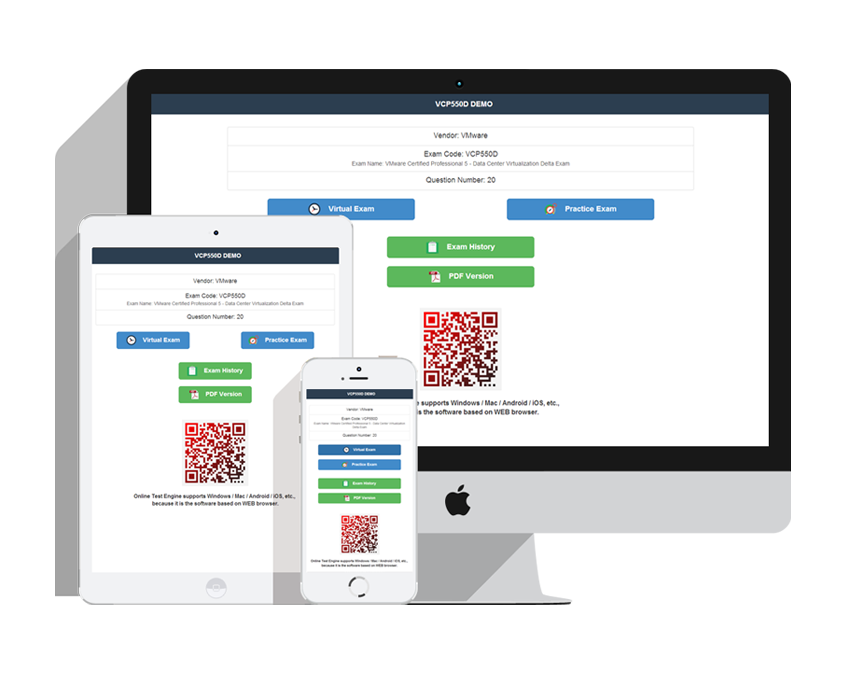
In addition to premium VCE file 2026 for LPIC-2 Exam 201, Part 1 of 2, version 4.5 exam, we release software and test engine version which may be more humanized, easy to remember and boosting your confidence. The software version of 201-450 real questions is used on computer and laptop. The APP test engine is used on all kinds of electronic products including computer, laptop and other products. Both of the two versions of 201-450:LPIC-2 Exam 201, Part 1 of 2, version 4.5 VCE 2026 can simulate the real exam scene, set up limited-time test, mark scores, point out mistakes and remind you practicing every time.


 Asa
Asa 
 Ivy
Ivy 
 Meroy
Meroy  York
York  Ophelia
  Morgan
 Theobald
  Claire
  Isaac
Isaac  Harold
  Bowen
Bowen  Muriel
  Maria
Maria  Herbert
  Alva
Alva  Honey
Honey  Rita
Rita  Ziv
Ziv  Geoffrey
  Levi
Levi  Mandel
  Joyce
Joyce  Alan
Alan