Ask us any-time if you are interested in our TOGAF Enterprise Architecture Combined Part 1 and Part 2 Exam VCE 2026
RealVCE provide you excellent online support which is available for candidates 24/7 if you have problem about our OGEA-103 real questions, and we will answer your query in two hours mostly. Our service rule is that all emails and contacts will be replied as soon as possible. If you want to purchase our OGEA-103: TOGAF Enterprise Architecture Combined Part 1 and Part 2 Exam VCE 2026, you will receive our products immediately after your payment.
All we are not only offering you the best OGEA-103 real questions and answers but also the foremost customer service. Please rest assured that your money and information will be strictly protected and safe with our OGEA-103: TOGAF Enterprise Architecture Combined Part 1 and Part 2 Exam VCE 2026. Choosing our products will be your cleaver action for clearing The Open Group Enterprise Architecture real exam.
Instant Download: Our system will send you the OGEA-103 braindumps file you purchase in mailbox in a minute after payment. (If not received within 12 hours, please contact us. Note: don't forget to check your spam.)
Get Complete and Professional premium VCE file
At present you get the new version of TOGAF Enterprise Architecture Combined Part 1 and Part 2 Exam VCE 2026 available in the printable format because we know the worth of print-outs and how easy it is to learn when you log in our website on computer and download hard-copy of OGEA-103 real questions available. Trust us, your preparation for the real exam will get a whole lot convenience so that you have that added advantage, you can learn TOGAF Enterprise Architecture Combined Part 1 and Part 2 Exam exam VCE on your laptop whenever you want for free.
Many IT elites are busy in working daytime and preparing exams night. Although they may feel laborious, they don't believe The Open Group OGEA-103 real questions. All the wit in the world is not in one head. Maybe you have outstanding performance in work, professionals be professionals. TOGAF Enterprise Architecture Combined Part 1 and Part 2 Exam VCE 2026 is the latest, valid and accurate study material for candidates who are eager to clear exams. You can actually grasp the limited time to do as much interesting and effective things you like as possible. OGEA-103: TOGAF Enterprise Architecture Combined Part 1 and Part 2 Exam real questions are high value with competitive price products.

TOGAF Enterprise Architecture Combined Part 1 and Part 2 Exam VCE 2026 Guaranteed Clear Exam Success
RealVCE offers you valid VCE files for OGEA-103 which you will need to clear the The Open Group TOGAF Enterprise Architecture Combined Part 1 and Part 2 Exam exam, the VCE files we sell, has got supreme quality and helps you to clear real exam surely with only one time attempt. We provide you a 100% pass guaranteed success and build your confidence to be OGEA-103: TOGAF Enterprise Architecture Combined Part 1 and Part 2 Exam certified professional and have the credentials you need to be the outstanding performance with our OGEA-103 real questions. Our products are surely guaranteed to assist all candidates pass exams. We also guarantee your money safety. If you fail real exam with our TOGAF Enterprise Architecture Combined Part 1 and Part 2 Exam dumps VCE and send us your unqualified score, we will full refund to you with two working days with any doubt. We are confident with our high-quality OGEA-103 real questions.
Humanized and easy to remember software and test engine for real exam
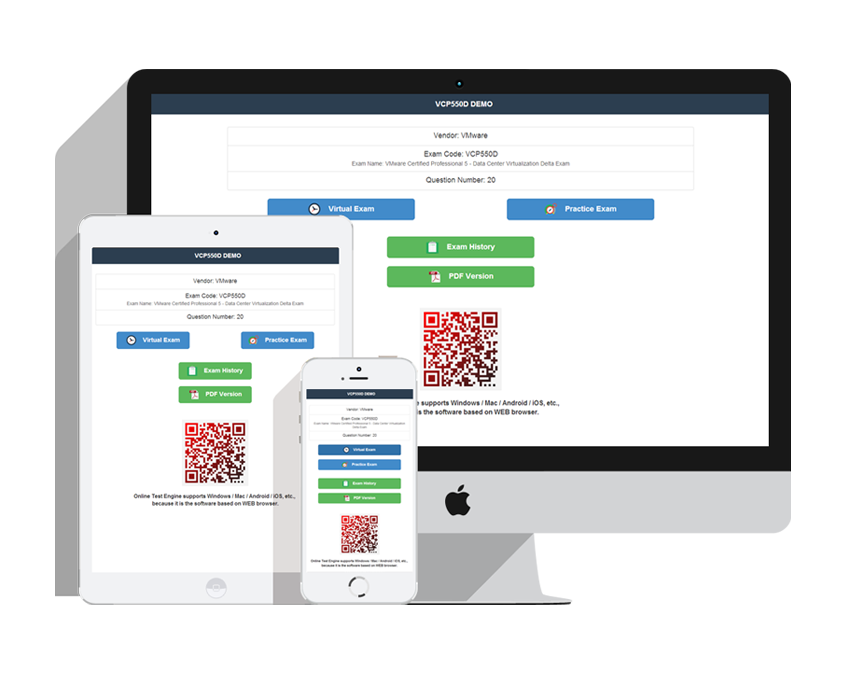
In addition to premium VCE file 2026 for TOGAF Enterprise Architecture Combined Part 1 and Part 2 Exam exam, we release software and test engine version which may be more humanized, easy to remember and boosting your confidence. The software version of OGEA-103 real questions is used on computer and laptop. The APP test engine is used on all kinds of electronic products including computer, laptop and other products. Both of the two versions of OGEA-103:TOGAF Enterprise Architecture Combined Part 1 and Part 2 Exam VCE 2026 can simulate the real exam scene, set up limited-time test, mark scores, point out mistakes and remind you practicing every time.
The Open Group OGEA-103 Exam Syllabus Topics:
| Section | Objectives |
|---|---|
| Topic 1: Enterprise Continuum and Tools | - Architecture Repository and reference models |
| Topic 2: Architecture Development Method (ADM) | - ADM Phases (A–H) and Requirements Management - Preliminary Phase and Architecture Vision |
| Topic 3: Architecture Domains | - Technology Architecture - Application Architecture - Business Architecture - Data Architecture |
| Topic 4: Architecture Content Framework | - Deliverables, artifacts, and building blocks |
| Topic 5: Architecture Governance | - Governance framework and compliance |
| Topic 6: Introduction to TOGAF Standard | - Core concepts of Enterprise Architecture - Architecture domains overview |
The Open Group TOGAF Enterprise Architecture Combined Part 1 and Part 2 Sample Questions:
Complete the sentence. The purpose of the Gap Analysis technique is to
- A. determine service levels for the architecture
- B. identify nonfunctional requirements for the architecture
- C. establish quality metrics for the architecture
- D. validate the architecture
Correct Answer: D 🗳️
Explanation: Only visible for RealVCE members. You can sign-up / login (it's free).
Please read this scenario prior to answering the question
You are working as an Enterprise Architect within a healthcare and life science company. The company is a leading player in its industry, dedicated to transforming healthcare with new ideas and advancements. The company has multiple divisions that cover different aspects of the business.
The company ' s Enterprise Architecture (EA) department has been operating for several years and has mature, well-developed architecture governance and development processes following the TOGAF Standard. In addition to the EA program, the company has a number of management frameworks in use.
The Architecture Board includes representatives from each division of the company.
Many of the company ' s rivals have begun utilizing Artificial Intelligence (Al) in their operations, and the indications are that this will be transformative for healthcare delivery. This is something the EA department has been interested in for a while, and they had recently submitted an architecture Change Request which was approved. As a result, the CIO has approved a Request for Architecture Work to investigate the implementation of Al in the company.
Areas for evaluation include:
How can staff use Al daily in their current role?
How Al can enhance access to care for patients, and how to make that experience seamless?
How Al can offer new workplace platforms and tools to increase efficiency?
Some of the top managers are worried about a change in the way of working, and if it will achieve the goals.
Many are not confident that the company ' s risk management processes are adequate for a company-wide integration of generative Al. There are also questions from staff about whether enough specific guidelines and polices have been put in place for responsible use of Al.
The Chief Information Officer (CIO) is the sponsor of the Enterprise Architecture program. The CIO has actively encouraged architecting with agility within the EA department as her preferred approach for projects.
The CIO wants to know how to address these concerns and reduce risks.
Refer to the scenario
You have been tasked with starting the architecture development. How do you begin?
Based on the TOGAF standard which of the following is the best answer?
- A. You recommend creation of a set of business models that can be applied uniformly across all Al-related architecture projects. These should be developed in the portable format to ensure maximumportability across the many tools used in the firm. Each architecture should then be defined based onthis fixed set of models. All concerned parties can then examine the models to ensure that theirneeds have been addressed.
- B. You recommend that a Communications Plan be created to address the key stakeholders, that is themost powerful and influential partners. This plan should include a report that summarizes the keyfeatures of the architecture with respect to each location and reflects the stakeholders ' requirements.You will check with each key stakeholder that their concerns are being addressed. Risk mitigationshould be explicitly addressed as a component of the architecture being developed.
- C. You recommend that an analysis of the stakeholders is undertaken. This will allow the architects todefine groups of partners (the stakeholders) who have common concerns and include developmentof a Stakeholder Map. The concerns and relevant views should then be defined for each group andrecorded in the Architecture Vision document. To mitigate risk, you include a requirement that therebe progressive development of the target architecture to ensure there is regular feedback.
- D. You recommend that models be created for the Draft Business, Data, Application, and TechnologyArchitectures. These can be used to ensure that the system will be compliant with the localregulations for each division. Together with the problem description, and requirements, this ensuresthat all the necessary data and detail is addressed. A formal review should be held with thestakeholders to verify that their concerns have been properly addressed by the models.
Correct Answer: C 🗳️
Explanation: Only visible for RealVCE members. You can sign-up / login (it's free).
Please read this scenario prior to answering the question
You have been appointed as Chief Enterprise Architect (CEA). reporting to the Chief Technical Officer (CTO), of a company established as a separate operating entity by a major automotive manufacturer. The mission of the company is to build a new industry leading unified technology and software platform for electric vehicles.
The company uses the TOGAF Standard as the basis for its Enterprise Architecture (EA) framework, and architecture development follows the purpose-based EA Capability model as described in the TOGAF Series Guide: A Practitioners ' Approach to Developing Enterprise Architecture Following the TOGAF ADM.
An end-to-end Target Architecture has been completed with a roadmap for change over a five-year period.
The new platform will be a cross-functional effort between hardware and software teams, with significant changes over the old platform. It is expected to be developed in several stages over three years. The EA team has inherited the architecture for the previous generation hardware and software automotive platform, some of which can be carried over to the new unified platform. The EA team has started to define the new platform, including defining which parts of the architecture to carry forward.
Enough of the Business Architecture has been defined, so that work can commence on the Information Systems and Technology Architectures. Those need to be defined to support the core business services that the company plans to provide. The core services will feature an innovative approach with swarm data generated by vehicles, paving the way for autonomous driving in the future.
The presentation and access to different variations of data that the company plans to offer through its platform pose an architecture challenge. The application portfolio and supporting infrastructure need to interact with various existing cloud services and data- Refer to the scenario You have been asked what approach should be taken to determine and organize the work to deliver the requested architectures?
Based on the TOGAF standard which of the following is the best answer?
- A. You will research leading data businesses, developing high-level Target Data, Application and Technology Architectures. You would review the Architecture Vision in order to estimate the level of detail, time, and breadth of the ADM cycle phases that will be needed to develop the architecture. You will identify and cost major work packages, and then develop an Architecture Roadmap. You would then seek approval by the Architecture Board and initiate the project.
- B. You would refer to the end-to-end Target Architecture for guidance and direction. The first objective should be to identify projects, dependencies and synergies, then prioritize before initiating the projects.
You will develop high-level architecture descriptions. For each project you would estimate effort size, identify reference architectures, and candidate building blocks. You will identify the resource needs considering cost and value. You will document options, risks, and controls to enable viability analysis and trade-off with the stakeholders. - C. You will revisit ADM Phase A. identifying the stakeholders and creating a new Architecture Vision.
You will update the Stakeholder map produced for the strategic architecture so it reflects the stakeholders who are now the most relevant to the projects that are to be developed. You would then ask the CTO to make some decisions about the Architecture Roadmap, and update the Implementation and Migration Plan to reflect the decisions. - D. You would look outside the enterprise to research data models and application portfolios of leading big data businesses. You would develop just enough applications, data, and technology architecture to identify options. For each project this should include identification of candidate architecture and solution building blocks. You will identify solution providers, perform a readiness assessment, and assess the viability and fitness of the solution options. You will then document the draft Implementation and Migration plan.
Correct Answer: B 🗳️
Explanation: Only visible for RealVCE members. You can sign-up / login (it's free).
Within the Architecture Repository, what does the class of information known as the Architecture Capability include?
- A. Patterns, templates, and guidelines used to create new architectures.
- B. The organization-specific architecture framework, including a method for architecture development and a metamodel for architecture content.
- C. Parameters, structures, and processes to support governance of the repository.
- D. A record of the governance activity across the enterprise.
Correct Answer: C 🗳️
Explanation: Only visible for RealVCE members. You can sign-up / login (it's free).
In which phase(s) of the ADM would you deal with the actions resulting from a transformation readiness assessment?
- A. Phase F
- B. Phase E and F
- C. Phase G
- D. Phase A
Correct Answer: B 🗳️
Explanation: Only visible for RealVCE members. You can sign-up / login (it's free).


 Enid
Enid 
 Orville
  Dawn
Dawn  Don
Don 
 Joshua
 Martin
  Martha
  Cheryl
  Sebastiane
  Barnett
  Les
Les  Henry
Henry  Jennifer
  Sid
Sid